Honda Civic
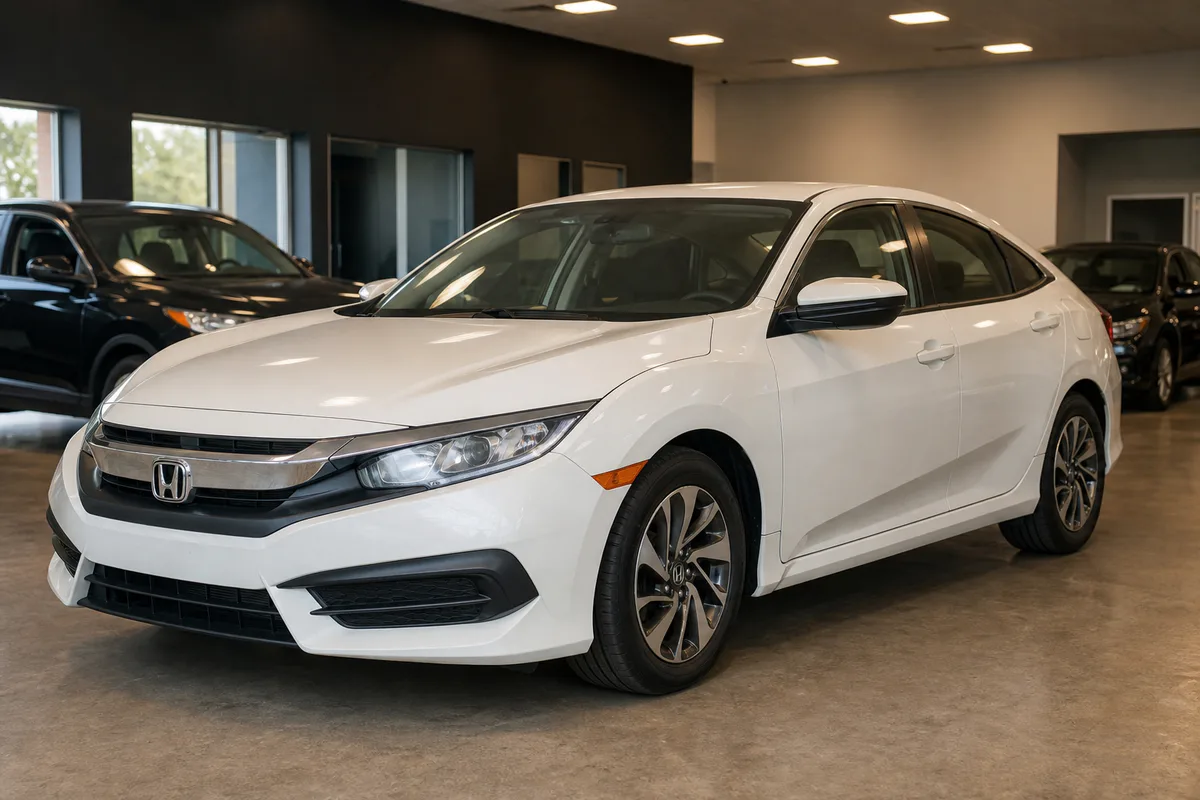
The compact sedan most people should look at first, and the hardest one to argue with.
Get ePrice View details →

Used Honda inventory
Honda engineering is defined by two things: efficient naturally aspirated engines that stay smooth well past 100,000 miles, and interior packaging that fits more usable space into a given footprint than rivals manage. Honda spends its budget on the parts you use daily rather than on the specification sheet.
Currently in stock2 matchesIn stock now
Used inventory turns over. Call 516-785-9378 to confirm a vehicle before you travel to Wantagh.
The compact sedan most people should look at first, and the hardest one to argue with.
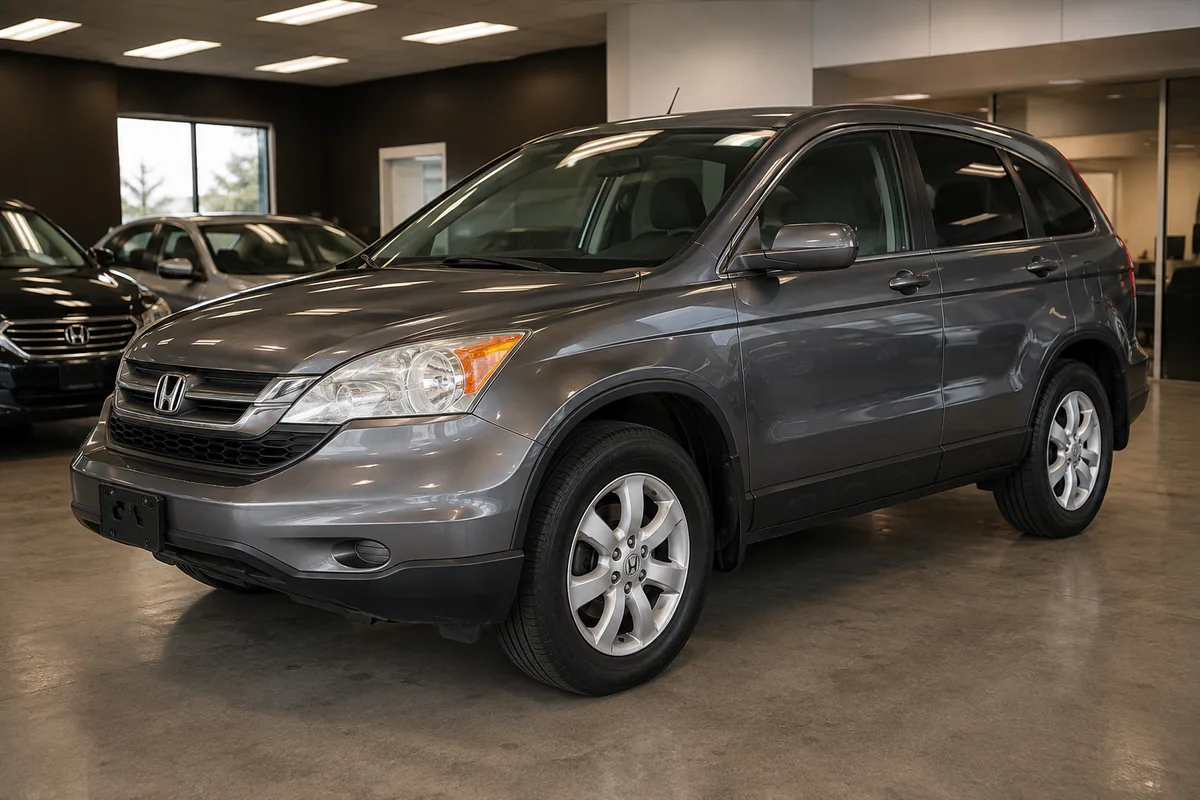
A high-mileage crossover chosen precisely because this generation tends to keep going.
Vehicle details are based on dealership records. Pricing, mileage, equipment, and availability should be confirmed with Cherrywood Auto before making a trip or a purchase decision. Vehicles listed without a price are quoted by phone.
The short answer
The engines are the foundation. The K-series four-cylinder, used in the CR-V and Accord for years, is a timing chain design with no scheduled belt replacement, and it has a long record of running past 200,000 miles when the oil is changed on time. Honda pursued efficiency through variable valve timing and low internal friction rather than through forced induction, which kept the hardware simple.
The second strength is packaging. Honda consistently produces cars with more rear legroom, a lower cargo floor, and a wider load opening than their exterior dimensions suggest. A tenth-generation Civic has back-seat room that midsize sedans of the previous decade did not, and a CR-V loads more easily than crossovers a size larger. That is deliberate engineering, not accident.
Third is the low cost of keeping one running. Parts are widely stocked, independent shops on Long Island know these cars well, and routine service is straightforward. Common wear items are inexpensive and the labor is familiar, so an estimate on a twelve-year-old Civic tends to look a great deal like the estimate on a five-year-old one. That predictability is a large part of why used Hondas hold the prices they do.
Going deeper
The Civic is the compact, and the tenth generation from 2016 onward is meaningfully larger, quieter, and better riding than the car before it. The Accord sits above it as a midsize sedan with more insulation and a longer wheelbase, and it is the better highway car of the two.
The CR-V is the crossover: a taller body over car mechanics, with a low cargo floor and available Real Time all-wheel drive that engages automatically when the front wheels slip. The Pilot and Odyssey take the same philosophy into three-row and minivan form, and the HR-V and Fit sit below the Civic for buyers who want the smallest usable footprint.
Across the range the split that matters most to a used buyer is the transmission. Older models use conventional automatics, while most newer four-cylinder models use a CVT. Neither is a problem in itself, but they age differently and they raise different service questions.
The trade-off
Start with transmission fluid history. Honda automatics and CVTs both want their own specified fluid at defined intervals, and a shop that used a generic substitute or skipped the service entirely is the most common cause of trouble on an otherwise sound car. Ask for the receipt rather than a reassurance.
On the 1.5L turbocharged engine used in some Civics and CR-Vs, there was a service campaign addressing fuel dilution of the engine oil, particularly in cold-weather short-trip use, which describes a great many Nassau County commutes. Confirm which engine the car has and whether the software update was applied. On the V6 models with cylinder deactivation, ask about oil consumption and check for a lifter tick at idle.
Then look underneath. On older Hondas the rear subframe, the exhaust hangers, and the area behind the rear wheel arches are where salt does its work first, and on all-wheel-drive examples the rear differential fluid is the service most often skipped. If nothing on the lot matches what you want, the car finder is the place to tell us which model and generation to watch for.
Before the test drive
Category-specific checks. Bring this list, or ask us to walk through it with you on the lot.
Useful answers
The four-cylinder engines routinely pass 200,000 miles with regular oil changes, and the timing chain designs remove one large scheduled expense. What usually decides the life of a Honda on Long Island is corrosion of the subframe and exhaust rather than the engine, which is why the underbody deserves more attention than the odometer.
It is when the fluid is serviced on schedule with the correct specification. A CVT is less tolerant of neglected or substituted fluid than a conventional automatic, and most complaints trace back to that rather than to a design fault. Ask for documented fluid service history and drive the car between 30 and 45 mph listening for shudder.
It is the Honda bundle of driver assistance features, including collision mitigation braking, road departure mitigation, lane keeping assist, and adaptive cruise control. It was offered on many trims rather than standard across the board in this era, so verify it on the individual vehicle instead of relying on the model year.
They are generally at or below average for the class. Parts are widely available and inexpensive, most independent shops here work on them regularly, and the service intervals are straightforward. The maintenance minder system in newer models tells you what is due, which makes it easier to verify that a previous owner kept up.
Not seeing it?
Describe the make, model, body style, budget, and the features that actually matter. A clear brief is a better search than a broad one.