Jeep Cherokee
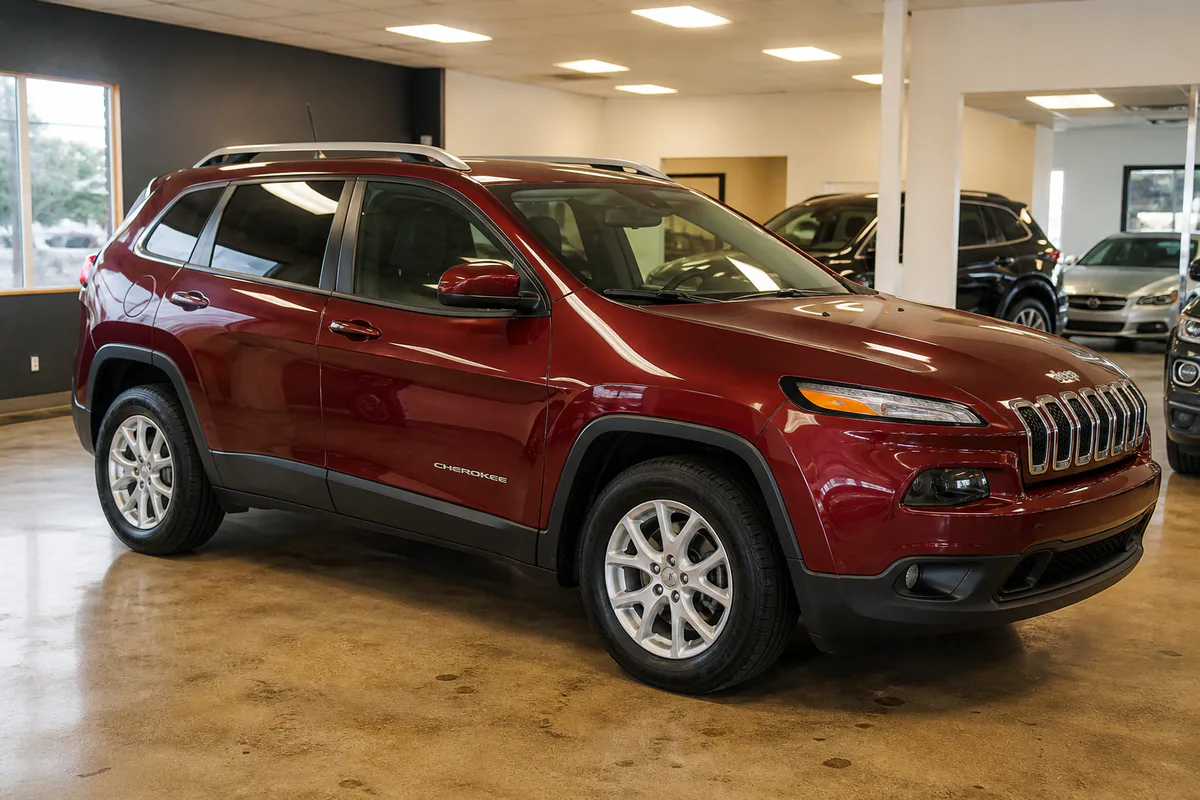
A compact SUV that keeps real off-pavement ability without a truck-sized footprint.
$21,495 View details →

Used Jeep inventory
Jeep engineers its vehicles around the drivetrain first. Low-range transfer cases, locking differentials, and on the Wrangler solid axles at both ends are choices almost no other mainstream brand still makes. What you trade for that capability is fuel economy, road noise, and a chassis tuned for traction rather than refinement.
Currently in stock4 matchesIn stock now
Used inventory turns over. Call 516-785-9378 to confirm a vehicle before you travel to Wantagh.
A compact SUV that keeps real off-pavement ability without a truck-sized footprint.
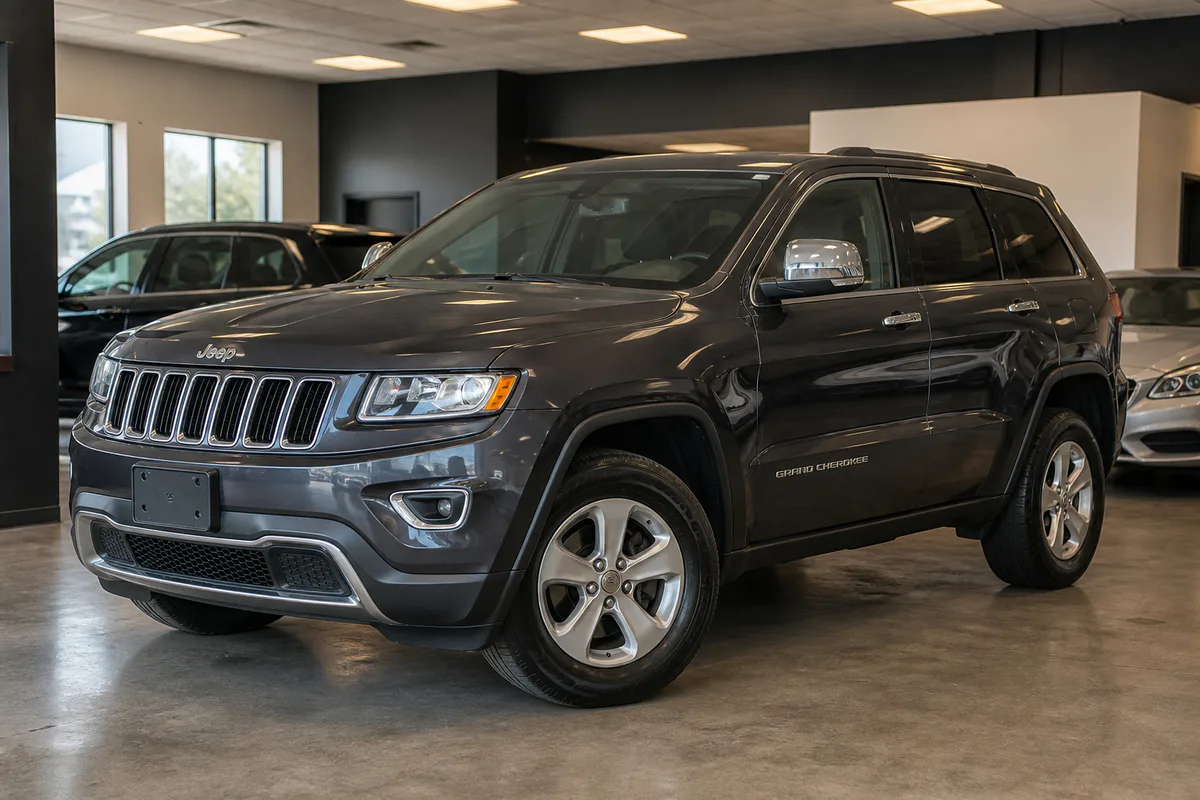
A midsize SUV that drives like a premium vehicle and tows like a truck.
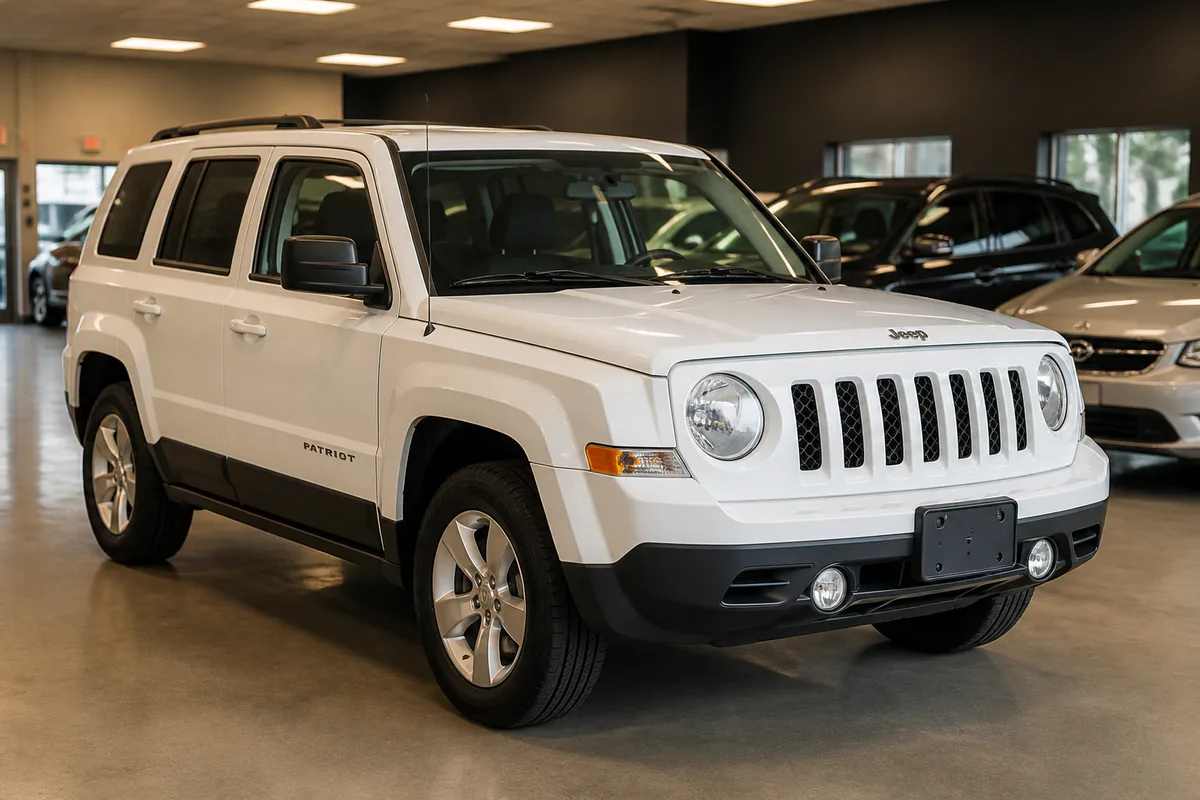
The most affordable way into a boxy, upright, easy-to-park small Jeep.
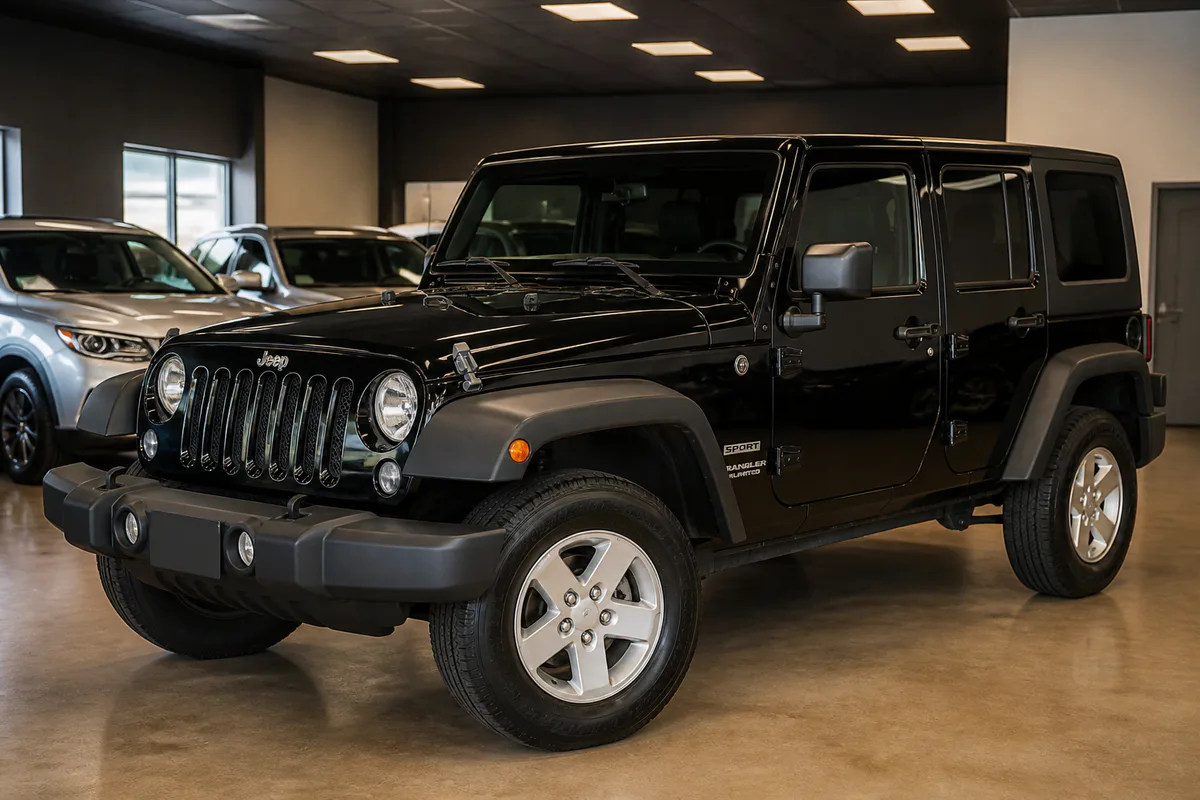
The one vehicle here bought for what it can do rather than what it costs to run.
Vehicle details are based on dealership records. Pricing, mileage, equipment, and availability should be confirmed with Cherrywood Auto before making a trip or a purchase decision. Vehicles listed without a price are quoted by phone.
The short answer
The brand exists because of the transfer case. A Jeep with Active Drive II, Rock-Trac, or Quadra-Drive has a low range, which multiplies engine torque so the vehicle can move a heavy load slowly and precisely, whether that is up a wet boat ramp at a South Shore marina or out of a rutted field. Most compact and midsize crossovers cannot do this at all, and it is not something you can add later.
The Trail Rated badge is the shorthand for the rest. It certifies that a model has been evaluated for traction, ground clearance, maneuverability, articulation, and water fording. It is a manufacturer standard rather than an independent one, but it is applied consistently, and a Trail Rated Jeep is measurably more capable than the same size vehicle without the badge.
The 3.6L Pentastar V6 deserves separate mention. It appears across most of the lineup from 2011 onward, independent shops know it well, and parts for it are inexpensive and everywhere, which keeps long-term ownership of an older Jeep more affordable than the badge suggests. The same engine appears in Chrysler and Dodge products of the same era, which widens the parts supply further and gives an independent shop more than one place to source from.
Going deeper
The Wrangler is the outlier and should be judged on its own terms. Body-on-frame, solid front and rear axles, a removable roof and doors, and a folding windshield make it uniquely capable and uniquely compromised: it is loud at seventy on the Southern State and its resale value is stronger than almost anything else in its price range.
The Grand Cherokee is the comfortable one. Unibody, midsize, quiet inside, with a V6 that tows in the region of 6,200 pounds when properly equipped. The Cherokee sits a class below it, parks like a compact crossover, and on the right trim keeps a low range that its competitors do not offer.
The Patriot and Compass of that era are the entry point. They deliver the shape and available four-wheel drive at the lowest price, without the refinement or the hardware of the models above them. Knowing which of these four groups you actually belong in is the fastest way to narrow a used Jeep search.
The trade-off
Corrosion comes first on any Jeep that has spent winters here. On body-on-frame models, examine the frame around the rear control arm mounts and the skid plate area. On unibody models, check the rear subframe and the suspension mounting points. Salt reaches those places long before it shows anywhere you can see from the driveway.
Transmissions are the second question, and the answer depends on the model. The nine-speed automatic used in the Cherokee received a series of software updates early in its life, and a solid-axle Wrangler can develop a steering shimmy over bumps that traces to worn track bar or steering components. Neither is a reason to walk away. Both are reasons to have the specific vehicle inspected rather than assumed. Finally, ask what has been modified. Lifts, oversized tires, and aftermarket bumpers are common on used Jeeps, and they affect speedometer calibration, alignment geometry, and wheel bearing life.
Before the test drive
Category-specific checks. Bring this list, or ask us to walk through it with you on the lot.
Useful answers
Reliability varies more by model and drivetrain than by the badge. The Pentastar V6 and the conventional automatics behind it have a good record and are inexpensive to service. The items worth verifying are transmission software history on nine-speed cars, front-end wear on solid-axle models, and air suspension condition where fitted.
It is the certification Jeep applies itself that a model has been tested for traction, ground clearance, maneuverability, articulation, and water fording. It is a manufacturer standard rather than an independent one, but it is applied consistently across the lineup and does indicate meaningfully greater capability than an untested vehicle of similar size.
The Wrangler holds value better than nearly anything else in its price bracket, and Gladiator and Grand Cherokee models hold up reasonably well. The smaller entry models depreciate at normal rates. Strong resale is helpful when you sell and works against you when you buy, so a used Wrangler rarely looks like a bargain.
The Cherokee and Grand Cherokee are the easiest to live with daily: quieter at parkway speeds, more comfortable, and better on fuel than a Wrangler. Choose a Wrangler when open-air driving and genuine off-pavement ability are the point, and accept the noise and fuel cost that come with it.
Not seeing it?
Describe the make, model, body style, budget, and the features that actually matter. A clear brief is a better search than a broad one.